 Book Bearings
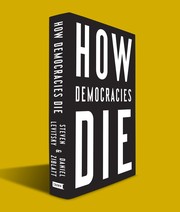
How Democracies Die
- 320 pages · about 5 hours
- First published 2018
- 13 editions
Bookshop.org links may earn us a commission. It supports independent bookstores and costs you nothing.
1 About this book
Mutual tolerance and institutional forbearance are two unwritten democratic norms crucial for a healthy and stable democracy. Coined by Harvard political scientists Steven Levitsky and Daniel Ziblatt in their 2018 book How Democracies Die, they are considered essential "soft guardrails" that reinforce a country's constitutional rules.
Mutual tolerance Mutual tolerance is the shared understanding that political rivals are legitimate and loyal citizens with an equal right to exist, compete for power, and govern. It is the willingness of politicians and the public to accept that opponents are not enemies, but legitimate participants in the democratic process.
When mutual tolerance erodes, it can create a cycle of distrust where politicians may demonize their opponents and treat political defeat as an existential catastrophe. Examples: A sign of mutual tolerance: A candidate who loses an election publicly concedes and congratulates the winner, even if the results are disappointing.
- Political culture
- Politics and government
- Political Ideologies
- Political science
- Politics And Government United States
- Democracy
- Authoritarianism
- Social movements
2 About Steven Levitsky

Bio adapted from Wikipedia (CC BY-SA 4.0)
3 Similar books
- Common Sense by Thomas Paine
- The Social Contract by Jean-Jacques Rousseau
- On Tyranny by Timothy Snyder
- My year in Iraq by L. Paul Bremer
- The Prince by Niccolò Machiavelli
- The Communist Manifesto by Karl Marx
- Politics by Aristotle
- The Audacity of Hope by Barack Obama